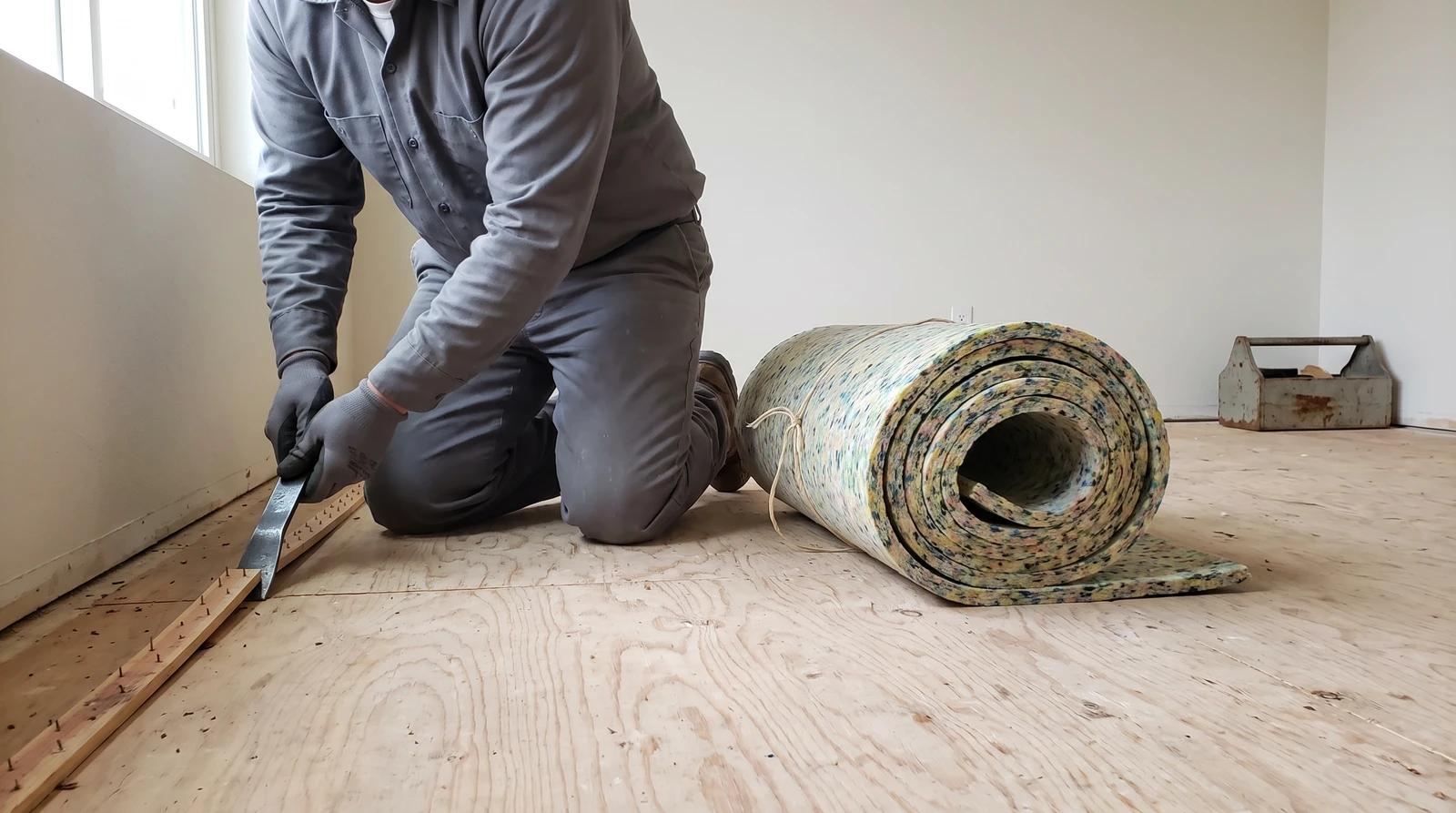
Tack Strip Removal After Carpet Comes Up: Pull It or Leave It?
Tack strip removal matters most when a hard floor like hardwood, laminate, vinyl plank or tile is going in. Going back to carpet? The old strip can sometimes stay, as long as it's tight, dry and sharp. If pets or water have soaked it, it should come out no matter what goes in next.
Tack strip is the thin wood board with all the little pins sticking up around the edge of the room. Most people don't think about it until the padding is gone.
What the strip does and when it has to come out
Each strip is usually about an inch wide, nailed or glued along the walls. It's covered in small angled pins (the "tack") that grab the back of the carpet and hold it tight. You'll also find it sold as carpet tackstrip in the flooring hardware aisle at a local home store.
Without it, wall-to-wall carpet would bunch up and ripple. So it does a real job.
The catch is that it's only useful under that one kind of floor covering. Once you're switching to anything else, it's just a strip of sharp pins in the way.
Putting in hardwood, laminate, luxury vinyl plank or tile? Then the tack strip needs to go.
Those floors need a flat, clean surface wall to wall. Leave the strip in and the new floor won't sit right along the edges, or the installer pulls it anyway, usually on their clock instead of yours.
Same goes for the staples. On a wood subfloor, the old pad is stapled down every few inches, and when the pad comes up, a lot of those staples stay behind. They have to be pulled or knocked flat before a hard floor goes over them, or you can end up feeling them through vinyl plank.
Worth asking: Before you book anyone, ask your flooring installer exactly what condition they want the subfloor in. Some want it bare and swept. Some want it scraped and ready for leveling. Get that answer first and the crew can leave it the way your installer needs it, so you don't pay twice.
When it can stay put
If new carpet is going back down, the strip can sometimes stay.
We check a few things. Is it still nailed down tight? Are the pins sharp and angled toward the wall? Is the wood dry and solid?
If all of that checks out, the installer may be fine reusing it. Plenty replace it anyway, since new strip costs little next to a callback. That's their call, and it's a reasonable one.
Where it really shouldn't stay is anywhere it's been soaked. Pet accidents tend to collect in one area, often right at the edges of a room, and the strip soaks it up like a sponge.
When the strip along a wall has taken that kind of soaking, it's usually dark and soft, and you can smell it the second the floor covering lifts. New padding over that tends to end up smelling the same.
Water damage is the other one. Rusted nails and swollen wood mean it's coming out.
Good to know: A soaked strip often leaves a dark stain on the subfloor in the same area. Pull the strip and the padding above it, then check how far the stain runs before new flooring hides it.
Slab or wood: what's under the floor in Boise homes
This is where the age and style of the house matters.
Some homes around the Treasure Valley sit on concrete slabs. On a slab, tack strip is held down with hardened concrete nails, sometimes glue too. It comes up fine, but it takes more care, and you'll often see little chips in the concrete where they let go. If you plan to remove tack strip from a slab, go slow and work a small area at a time.
Those chips don't matter under padding. For vinyl plank, your installer might want them patched first.
Older homes, like a lot of houses in Boise's North End or up on the Bench, usually have plywood or plank subfloors. The strip pulls easier there. That's also where you find the staples, old nail holes, and the occasional surprise from a remodel done decades ago.
Houses over a crawlspace can hang onto moisture near the exterior walls, too. If the strip is damp or dark along one side of a room, that's worth noticing before new flooring goes in.
Doing tack strip removal yourself: tools and steps
Can you pull tack strip yourself? Sure. A flat pry bar, a hammer, heavy gloves and safety glasses will get it done.
Removing carpet is the quick part. The strip is where the time goes. Here's the order I always use:
- Clear the space. Once you remove your carpet and padding, roll them up and get them out of the room.
- Start at a corner. That's where two runs of tack strip meet, and it's the easiest spot to get a bar under the wood.
- Work the bar in at each fastener. Slide a mini-pry bar under the strip, tap the end with the hammer, then lift. A tap and jiggle beats one hard yank.
- Go in short pieces. Old strip is dry and snaps easily. If it splits, break it into short sections and pry them up one at a time.
- Pull the leftover nails. For anything that stays in the subfloor, I always use a cat's claw. It digs under the head and lifts it out.
- Finish the subfloor. Removing staples goes faster with a pair of needle nose pliers. On a slab, a wide putty knife works ideally for scraping off glue and bits of foam.
- Bag it with the pins facing in. Loose strip can cut right through trash bags. Check your local hauler's rules for sharp debris.
A few notes on the tools:
- Bars: A flat pry bar does most of the work. You can use a mini-pry bar in tight spots, like a corner behind a door or next to a heat register.
- Hammer: It drives the bar under the strip. Don't just smack it from the top, which pushes the pins deeper and can split the subfloor.
- Shovel: On long slab runs, you can use a round-point garden shovel. Push the blade under the strip, lean back on the handle, and it lifts a long piece at once.
- Pliers: Stubs that snapped off low? Grab them with locking pliers and pry them out against a scrap of wood so you don't dent the floor.
- Cat's claw: The small puller with a curved, split tip, made for anything driven flush.
Glued strip on concrete is the stubborn one. It's tempting to just smack it harder, but that chips the slab. Slide the pry bar or a round-point garden shovel in from the side, and if a piece won't lift, break it at the glue line and keep going.
Wear cut-resistant gloves, since those pins will find your hands at least once. It's slow work and rough on your knees. The first room is fine. The fourth room is not.
If it's one small bedroom and you've got a free Saturday, you can probably handle it. If you need to remove carpet tack strips through a whole house in Eagle going to vinyl plank, it's worth having that done with the rest of the job.
The strip doesn't add much time when it's planned in from the start. It adds a lot when someone remembers it after the crew has left. That's why it helps to say what's going down next when you book Residential Carpet Removal.
Hard flooring going in? Pull the strip and the staples. New carpet going back down? The strip might stay if it's solid, dry and clean. Either way, decide before you remove your carpet, not after.
If you'd like someone to come look and tell you what's under there, give us a call at (208) 314-4315. We'll give you a straight answer and a free estimate, and you can take it from there.
Frequently asked questions
Do I need new strips when replacing carpet?
Not always. If the old strip is tight, dry and the pins are still sharp, an installer may reuse it. If it's loose, rusty or stained, plan on new strip.
Why is the old strip poking through?
Usually it was set too far from the wall, or the carpet wasn't stretched tight and has shifted. Either way the pins end up out where people walk. Resetting or replacing that run fixes it.
Can I just cut the nails flat instead of pulling the strip?
Not under hard flooring. Even if you cut them all, the wood strip still sits higher than the subfloor, and the new floor won't lie flat over it. Pull the whole thing.
How do I clear the space before the crew comes?
Related reading: How to Remove Carpet Without Cutting It and Keep It in One Piece and How to Remove Carpet Without Removing Baseboards (and Keep Them Clean).
Move furniture and anything fragile off the floor and out of the room, and keep pets and kids out of the work area.
Want us to handle it?
(208) 314-4315More From Our Blog
How to Remove Carpet Gripper From Wood or Concrete Without Gouging It
How to remove carpet gripper from a wood subfloor or concrete slab: where to pry, what to do with leftover nails, and how to bundle old strips safely.
How to Get Rid of Old Carpet: Trash, Recycling or a Removal Crew
How to get rid of old carpet: when your trash bin works, when your installer should haul it, and what a removal crew pulls, hauls, donates or recycles.
How to Remove Glued Carpet and Where All of It Goes Afterward
How to remove glued carpet with the end in mind: cut it, pull it, scrape the glue, then sort what can be donated, recycled or hauled to the landfill.
