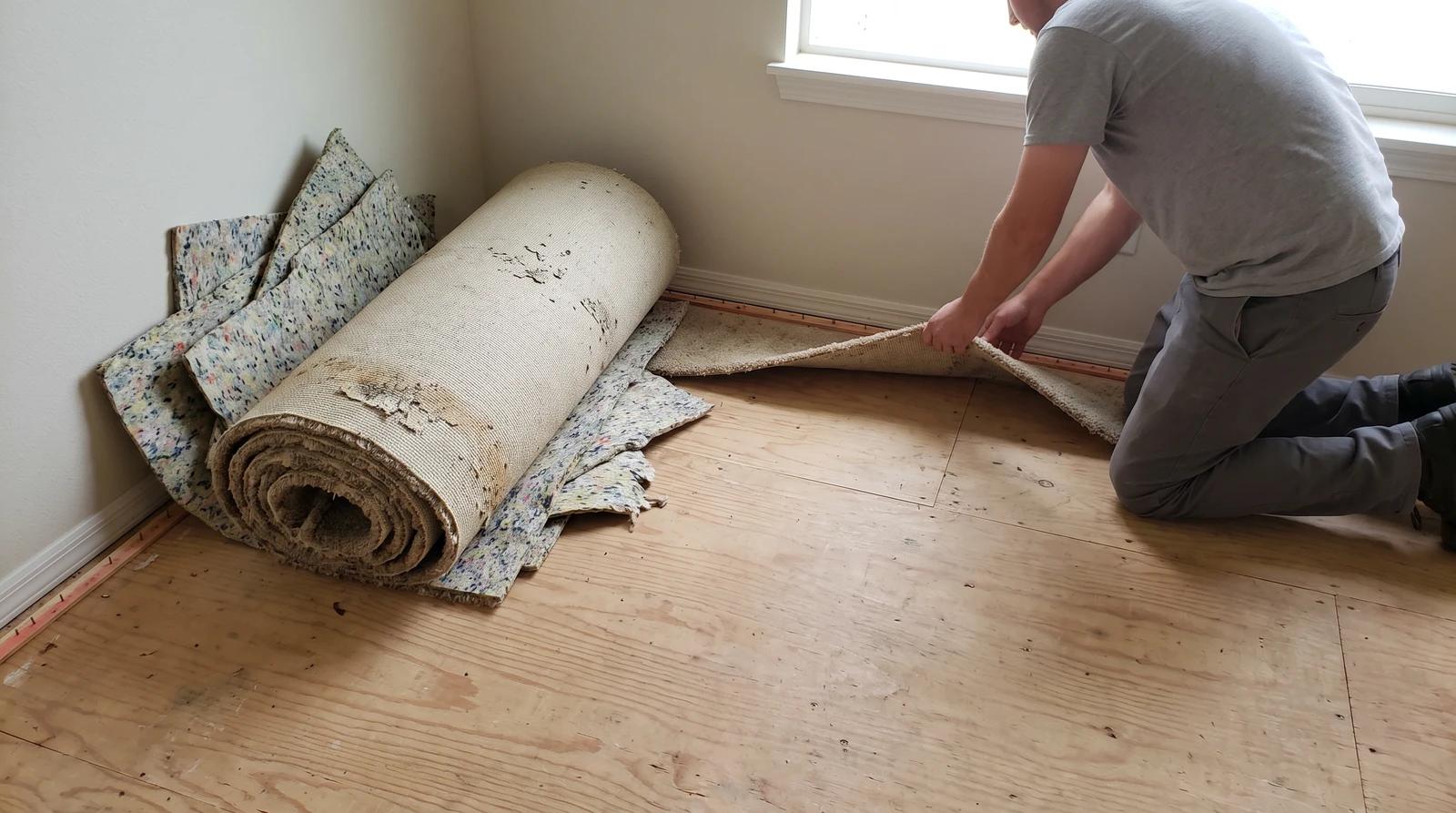
Carpet Removal Between Tenants in Boise: A Landlord's Prep Guide
Your tenant just handed back the keys. The carpet looked tired at move-in, it looks finished now, and the next renter wants in as soon as possible. Carpet removal in Boise rentals works a little differently from a homeowner's remodel, mostly because you're racing a vacancy and keeping records for a deposit.
Here's what's worth knowing before the old carpet comes up.
Why carpet removal between tenants is its own kind of job
In a house you live in, you pull carpet whenever it suits you. In a rental, every empty day is rent you don't collect.
That changes the order of things. Flooring usually lands after paint and repairs and before the final clean, so everyone after it is waiting. If the carpet comes out late, the painter, the installer and the cleaner all slide back with it.
Rental carpet also tends to be rougher than carpet in an owner-occupied home. Pet accidents, ground-in dirt by the door, burns, worn paths down the hallway. The pad underneath is often worse than the carpet on top, and that's where most of the smell lives.
Timing carpet removal in Boise with your turnover
The best time to line up the tear-out is before the tenant actually leaves. You don't need a date set in stone. You just want an estimate done and a rough plan in your pocket.
Around Boise, plenty of leases end in late spring and summer. That's also when college move-outs near Boise State pile up and when homeowners across the Treasure Valley start their own flooring projects. Schedules fill up fast. If your lease ends in June, start making calls in May.
Winter turnovers are slower, but they've got their own quirks. A vacant unit in Meridian or Kuna with the heat turned way down means stiff carpet and brittle pad that don't roll up cleanly. Keep the heat at a sensible level until the flooring's done. It makes the work easier, and your pipes will thank you anyway.
So what actually moves the timeline? The number of rooms, whether there are stairs, how the carpet's held down, whether the pad is glued or stapled, and access. A ground-floor duplex in Nampa is a very different job from a third-floor apartment with one narrow stairwell.
What to check before carpet removal in a Boise rental
Walk the unit with a few questions in mind.
Do you know what's under it? Older rentals in the North End or up on the Bench sometimes hide hardwood under the carpet. Sometimes it's old sheet vinyl or tile instead. That matters for what goes down next, because some new flooring can go over the old layer and some can't.
How old is the building? Flooring and adhesives from older construction can contain asbestos. Pulling carpet off the top usually doesn't disturb that layer, but scraping or breaking up old vinyl or tile underneath can. If you're planning to go deeper than the carpet in an older unit, get that lower layer tested before anyone scrapes.
Condo or HOA rules? A lot of condo and townhome associations in Eagle, Meridian and Boise set work hours and rules about elevators and where debris can sit. Some want notice before contractors show up. Read yours before you book so nobody gets turned away at the door.
Is there damage under the pad? Pet urine soaks through to the subfloor. A slow leak from a toilet or dishwasher shows up as dark, soft spots. You won't really know until it's open, so leave yourself a little room in the schedule for whatever turns up.
Permits usually aren't part of the picture for pulling carpet on its own. If you're also moving walls or touching plumbing, check with your city's building department, since Boise, Nampa and Caldwell each handle their own.
Deposits, photos and the stuff tenants leave behind
This part protects you more than it does anything for the floor.
Idaho landlords can keep part of a deposit for damage beyond normal wear and tear, but not for carpet that simply got old. If you plan to charge for pet damage or stains, you'll want proof from before the carpet left the building.
Tip: Take dated photos and a short video of every room's carpet before removal. Get close-ups of stains and damage plus a wide shot that shows which room you're in. Once the carpet's hauled off, that's the only evidence you've got if the deposit gets disputed.
Also, clear out whatever the tenant left behind. Furniture, boxes, a forgotten mattress. If it's still in the room, it has to move before the carpet can come up. Get it cleared before the crew arrives so it doesn't hold up the work.
Getting the floor ready for the next renter
Once the carpet and pad are out, the next question is the tack strip. If you're putting carpet back down, an installer may reuse strip that's still solid. If you're switching to vinyl plank, which a lot of Treasure Valley landlords do because it wipes clean between tenants, the strip, staples and pad scraps all need to come up so the floor is flat.
Ask for a broom-clean subfloor at the end. That way your installer starts on the actual install instead of on their knees pulling staples.
Where does it all go? Much of what we haul gets donated or recycled. Worn rental carpet with heavy pet damage is harder to reuse, so it's fair to ask what will happen to yours. Carpet that's still in decent shape is worth asking about, though.
Keeping the vacancy short
Plan the carpet removal before move-out. Photograph everything, clear the rooms, and know what's going down next before the old floor comes up. Handle that ahead of time and the flooring is a lot less likely to be the reason a unit sits empty.
Yes, we'd like the work, but even if you never call us, that order of operations will save you time. If you want a firm price before your tenant moves out, give us a ring at (208) 314-4315. We'll come take a look, price it by the space and the work involved, and you can decide from there.
Want us to handle it?
(208) 314-4315More From Our Blog
Commercial Carpet Tile Removal in Boise Before New Flooring
Carpet tiles come up differently than broadloom. Here's what commercial carpet tile removal in Boise really involves, from adhesive to stacking and disposal.
Mobile Home Carpet Removal in Boise Before New Flooring
Mobile home carpet removal in Boise takes a lighter hand. Here's what's under the carpet, where soft spots hide, and how to prep the floor for new flooring.
Carpet and Pad Removal in Boise When There's Hardwood Underneath
Think there's hardwood under your old carpet? Here's how to check, what carpet and pad removal leaves behind, and how to save the wood in Boise homes.
