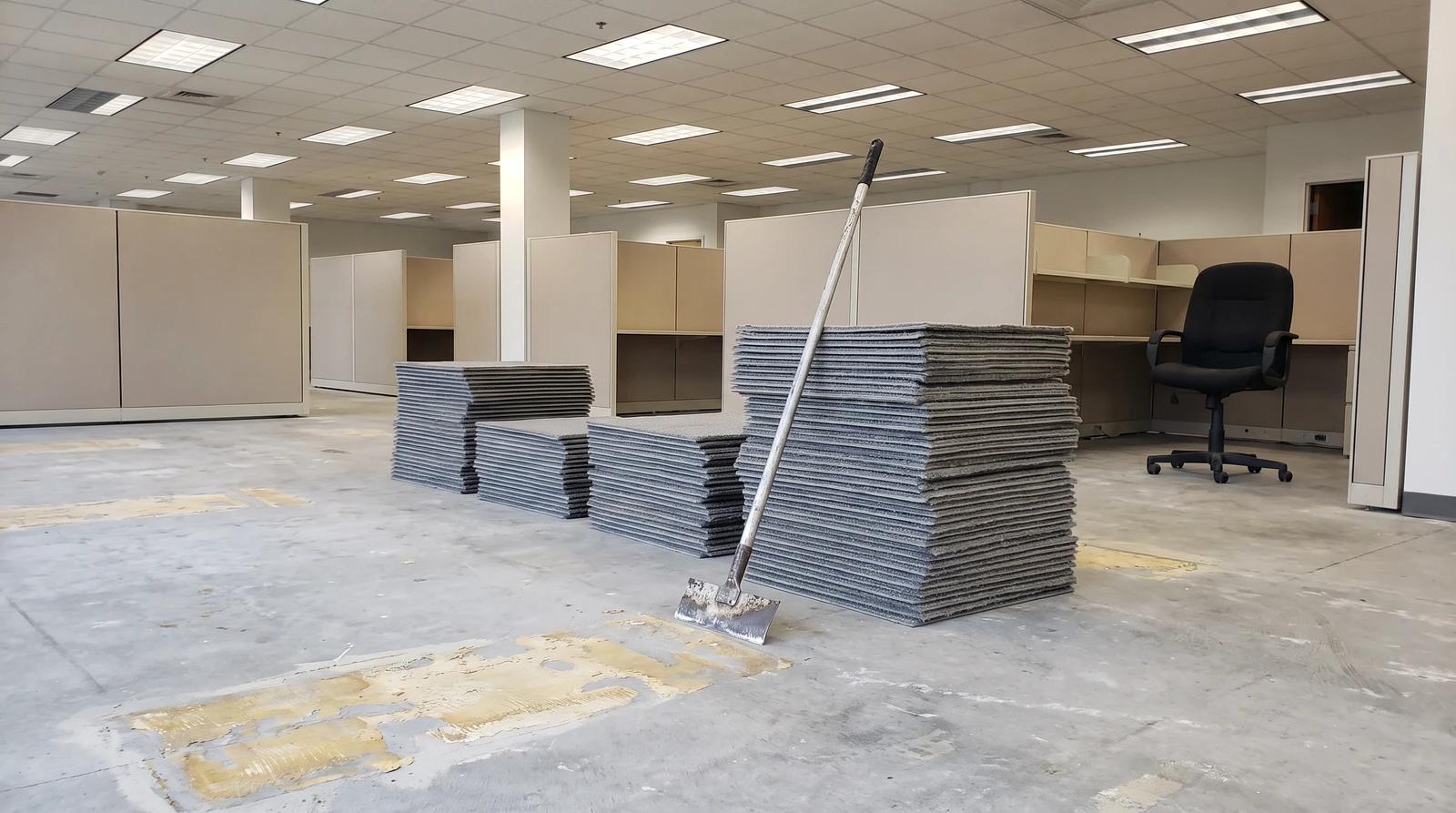
Commercial Carpet Tile Removal in Boise Before New Flooring
Your office floor is made of squares. Maybe they're two-foot tiles, maybe planks, and a few by the break room got swapped out at some point for ones that don't quite match. If new flooring is coming, you might figure this is the easy kind of carpet removal in Boise.
Lift a corner, peel it up, done. Sometimes it really is that simple.
A lot of the time it isn't. So let's walk through what commercial carpet tile removal actually involves, and what's worth sorting out before anyone shows up with a scraper.
Carpet tiles aren't the same as broadloom
Wall-to-wall commercial carpet gets cut into strips and rolled up. Then you deal with whatever glue or pad is underneath.
Tiles work differently. Each one is its own small piece with a heavy, stiff backing. That backing is why they lie flat without stretching, and it's also why they get surprisingly heavy once you start stacking them.
So the job shifts. There's less cutting and a lot more lifting, stacking, carrying and hauling. A big open floor can mean plenty of trips out to the dumpster or trailer, and the weight adds up faster than most people expect.
What's holding them down
This is the part that decides how your removal goes.
Most carpet tiles go down with a releasable adhesive, sometimes called tackifier. It stays a little tacky on purpose, so single tiles can be pulled and replaced. When that's what you've got, tiles usually pop up cleanly by hand or with a flat bar.
Not every install follows the book, though. Some floors got a full spread of permanent glue, either because the installer wanted extra hold or because the tiles went down over an old glue bed. Those tiles fight back. The backing tears, and patches stay stuck to the slab until someone scrapes them off.
How do you tell which one you have? Pull up a tile in a closet or under a desk. If it lifts with a sticky, almost tape-like feel and comes off whole, you're probably in good shape. If it rips, or leaves hard, crusty glue behind, plan on more scraping.
Heads up: Look at what's under the tiles before you book anything. In older Boise and Treasure Valley commercial buildings, carpet tiles were sometimes laid right over vinyl floor tile or old black mastic. Some older flooring and adhesives can contain asbestos, and federal rules generally call for an asbestos inspection before a commercial renovation disturbs suspect materials. If you spot old vinyl squares or dark glue, get it tested before anything gets scraped.
Getting the space ready for commercial carpet removal in Boise
Once the floor is open, tiles come up pretty quickly. Getting the floor open is usually the bigger job.
Offices have cubicle panels, file cabinets, desks that were assembled in place, and a server rack nobody wants to touch. Decide early who's moving all of it. Some businesses have their furniture vendor or their own staff clear one section at a time, with the removal following right behind.
Watch for cabling, too. Floor boxes, power poles and data runs often sit right in the middle of the carpet. Tiles around them were cut to fit, so those spots take more care.
Then there's access. A ground-floor space in Meridian's Ten Mile corridor with a back door by the parking lot is a very different day from a third-floor suite downtown with one shared elevator. Ask your property manager about elevator reservations, loading hours and where a dumpster or trailer is allowed to sit.
Can the tiles be reused or recycled?
Sometimes. Tiles that came off clean and whole are a lot easier to donate or pass along than torn, glue-crusted ones. Some flooring makers run take-back programs for their own tiles, so if you know the brand, ask your flooring installer about it.
Keeping tiles intact and stacked neatly gives you more options than tossing everything in a bin, and much of what we haul does end up donated or recycled.
Weather, disposal and carpet removal around Boise
Idaho weather matters here, even though the work is indoors.
In summer, a shop office or warehouse space without much cooling gets hot, and warm adhesive turns softer and stickier. Winter has its own problem. Stacks waiting on a loading dock in Nampa or Caldwell in January can get cold, wet or snowed on, which makes them heavier and messier to haul.
Where it all goes depends on where you are. Ada County loads usually head to the Ada County landfill, while Canyon County runs its own landfill with its own rules and fees. Hauling it yourself from Kuna, Star or Eagle? Check the current hours and what they accept before you load up.
One more thing people forget is the slab. Once the tiles are gone, your flooring installer is going to care about leftover adhesive, cracks and low spots. Ask them how clean they need the floor before removal starts, so nobody's surprised on install day.
What to do next
Carpet tiles look simple, and sometimes they are. What's really under them, how they were glued, and how much furniture and cabling sits on top decide how much work you're looking at.
Pull a test tile. Ask your building about access. Get anything suspicious under the carpet tested first.
If you'd like someone to come take a look, Boise Carpet Removal does free on-site estimates around the Treasure Valley and gives you a firm price before anything gets touched. Give us a call at (208) 314-4315 whenever you're ready.
Want us to handle it?
(208) 314-4315More From Our Blog
Mobile Home Carpet Removal in Boise Before New Flooring
Mobile home carpet removal in Boise takes a lighter hand. Here's what's under the carpet, where soft spots hide, and how to prep the floor for new flooring.
Carpet and Pad Removal in Boise When There's Hardwood Underneath
Think there's hardwood under your old carpet? Here's how to check, what carpet and pad removal leaves behind, and how to save the wood in Boise homes.
Carpet and Pad Removal in Boise for Pet Odor That Won't Quit
Pet odor that comes back after shampooing usually lives in the pad and subfloor. Here's what carpet and pad removal in Boise involves and what comes next.
