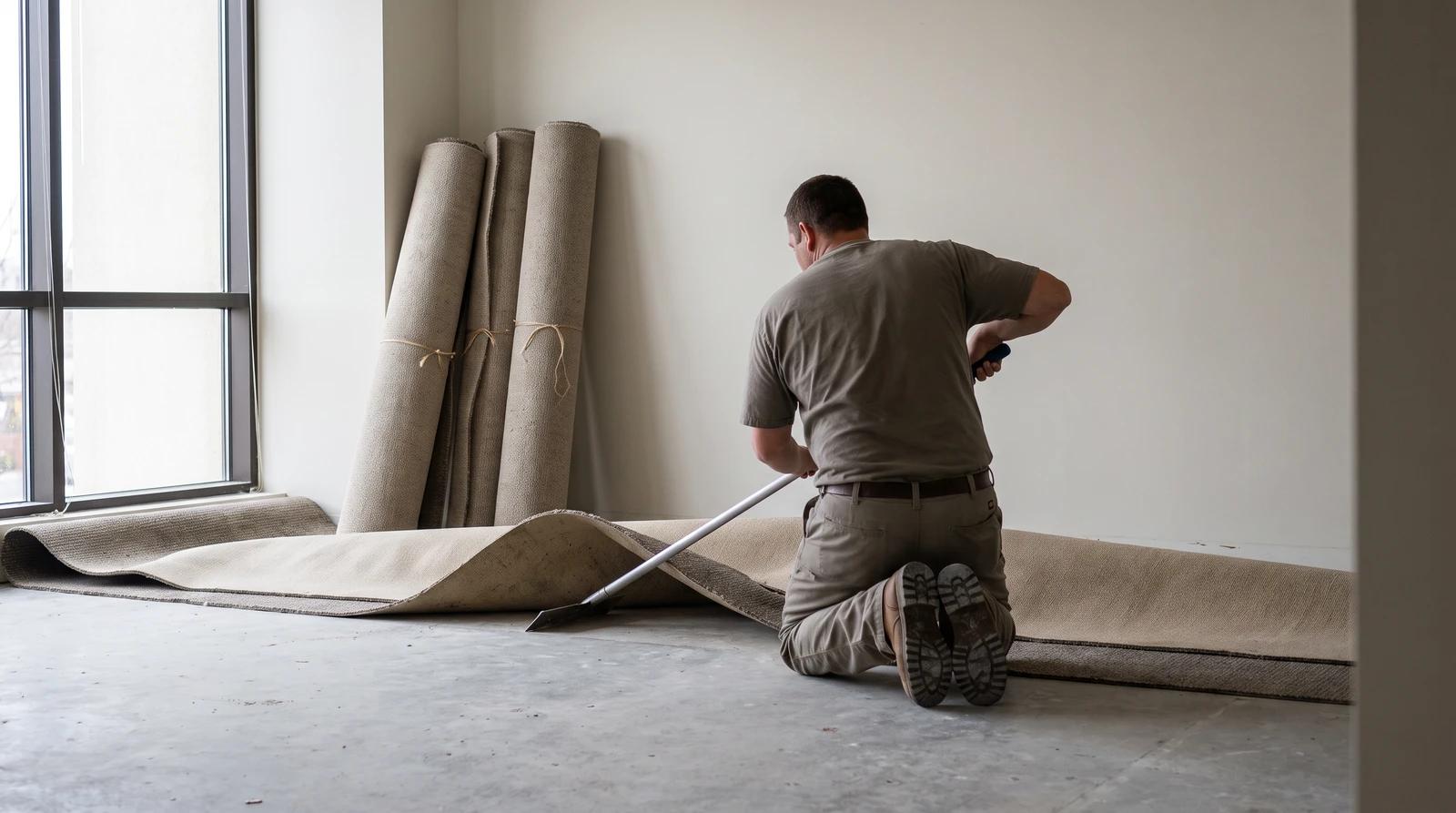
Commercial Carpet Tear Out: Lease Ends, Boise Business Guide
A commercial carpet tear out when your lease ends in Boise comes down to three things: what the lease says, what the landlord wants the floor to look like, and when the work fits between the movers and the final cleaning.
Read the move-out section of the lease first. Get the landlord's answer in writing. Then book the tear out early, so you aren't still scraping glue off the slab the morning the keys are due.
What does your business lease say about the floor?
Most leases cover the floor in the surrender or move-out section. The exact wording matters, whether you run an office, a shop or one of the many restaurants with soft flooring in the dining room.
"Broom clean" usually means empty and swept. "Original condition" or "restore the premises" can mean the flooring you put in has to come out. That's most likely if it went in as part of your tenant improvements.
Some leases say alterations stay with the building. Others let the landlord decide whether to keep them or have you pull them. If yours reads that way, get the decision in writing.
And if the flooring was already there when you moved in? Then you may not have to touch it beyond normal wear and a good cleaning. Confirm that before you pay anyone to tear it out.
One short email to the landlord or property manager saves a lot of guessing. Put these questions in it.
Does the flooring stay or go? A nod during a walk-through isn't the same as a reply you can point to later.
What should the floor look like afterward? Bare concrete with the glue left on is one job. A slab scraped clean and ready for the next tenant is a bigger one. Tack strip, cove base and floor tiles all belong in the same answer.
What's under it? Ask what sits underneath. Concrete, old tile and wood subfloor each come up a little differently.
Are there building rules for the work? Multi-tenant buildings, downtown and around the Boise metro area, often set rules about loading docks, elevator protection and contractor hours.
Is anything else on the move-out list? A partition wall or a built-in reception counter is demolition, not flooring. Pulling flooring alone usually doesn't need a permit. Taking out walls can, and the rules depend on which city the building is in.
Quick tip: Take dated photos of every room before anything gets pulled up, and again once the floor is clear. If there's ever a question about your deposit or the slab, those photos answer it.
Timing a commercial carpet tear out as your Boise lease ends
Nothing comes up until the furniture, cubicles and file cabinets are out. It's also where most lease-end schedules get squeezed.
The order goes movers, then flooring, then final cleaning, then keys. If the move runs late, everything behind it slides. So plan from your last day of business, not just the date on the lease.
Restaurants have the tightest window. The floor can't come up while tables and booths are still in the dining room, and most want to stay open as long as they can.
Access counts too, whether you're downtown or across town. A ground-floor suite with a back door near the dumpster is a very different day from a third-floor office with one shared elevator.
Season matters too. Winter can mean ice at the loading door, and summer can mean an empty building with the AC shut off.
How much does it cost to remove commercial flooring?
There's no single number, and an honest crew will want to see the space first. Jobs cover a wide range, from one small office to a full floor. These push the cost and the time up or down.
- Square footage. More floor means more labor and more to haul.
- How it was installed. Stretched, glued and tile floors each come up differently.
- What's left on the slab. Old adhesive that has to be scraped off adds real time.
- Access. Stairs, a shared elevator or a long walk to the truck all slow the work.
- Disposal. Rolled flooring and pad are heavy, and they add up fast.
| What's on the floor | What it means for the job |
|---|---|
| Stretched over pad and tack strip | Comes up faster. The pad and strip still have to be pulled and hauled. |
| Glued-down broadloom | Slower. It gets cut in strips and pried loose. |
| Square tiles | Lifts in squares. Tiles in decent shape can sometimes be reused. |
| Glue left on concrete | Extra scraping if the landlord wants a clean slab. |
Flooring in offices and shops is often glued down tight, since it's built for heavy foot traffic. Restaurants add one more wrinkle. Their dining room floor often stops at a hard floor near the kitchen, so only part of the space needs work.
Chasing the best prices alone can backfire. A cheap quote that leaves out haul-away or glue scraping isn't cheap by move-out day. Crews quoting lease-end work don't all include the same things, so ask each one what they offer, and what's not included.
Worth asking: Does the quote cover hauling and disposal, or just the tear out? Plenty of buildings won't let a departing tenant toss flooring in the shared dumpster.
In Boise, Garden City and Meridian, whatever can't be reused usually goes to the Ada County landfill. Nampa and Caldwell sit in Canyon County, which runs its own landfill with its own rules and fees. Check their current requirements if you plan to haul it yourself.
Clean pad doesn't always need to be landfilled, so ask whoever you hire what they donate or recycle.
How do you demo commercial flooring?
Here's the basic order, whether you do it yourself or hire it out.
- Clear the room of furniture, cubicles and anything on the floor.
- Pull the cove base off the walls.
- Cut the flooring into strips and roll them up.
- Pull the pad, if there is one.
- Pry up the tack strip. It's full of nails pointing straight up.
- Scrape the glue, if the landlord wants a clean slab.
- Sweep, haul it all out and take it to the landfill.
Could your own staff handle a small office? Maybe. One stretched-in room isn't complicated.
The trouble with a lease-end job is everything around it. Even great people on your team are busy keeping the business running and the move on track. Glued-down flooring is rough on backs and knees.
Then it all has to leave without breaking the building's rules.
If you shop around, ask about removal by name. Flooring shops around town vary a lot, and some would rather someone else pull the old floor before a new install.
Even if a flooring shop does installs, or a site lists cleaning too, check that tear out and haul-away are part of the job.
Good to know: If the lease only asks for clean floors, you need professional cleaners, not a removal crew. Many local shops handle both home and office work, and clean floors and furniture too. Flooring that stays still needs to look cared for at the walk-through.
So read the lease, get the landlord's answer in writing, and schedule the tear out after the movers and before the cleaners. Carpet and flooring tear out and haul-away is what we specialize in.
If you'd like someone to walk the space and give you a firm price before anything's touched, give us a call at (208) 314-4315. We work across the Treasure Valley, price by the space and the work involved, and there are no hidden fees.
Frequently asked questions
How long does office flooring last with normal wear and tear?
It depends on the grade, the foot traffic and how often it's cleaned. A busy lobby wears out far sooner than a back office. Many leases don't make tenants fix normal wear and tear, so check yours.
Is 10-year-old flooring unhealthy?
Not by age alone. Old flooring can hold dust and allergens deep in the pad, and any spot that got wet can grow mold. If it smells musty, ask a cleaning company what they offer, and if it stays stained after a cleaning, pulling it is the safer call.
Do restaurants follow the same steps?
Mostly, yes. Restaurants just have tighter timing, since tables and booths have to come out before the floor can.
What if walls or counters have to come out too?
The Commercial Carpet Removal page covers what the service includes and how the estimate works.
Related reading: Commercial Carpet Removal in Boise: Old Tile and Black Mastic and Commercial Carpet Tile Removal in Boise Before New Flooring.
That's demolition, and it can need a permit depending on the city. We can handle the permit application for that part of the job.
Want us to handle it?
(208) 314-4315More From Our Blog
How to Remove Carpet Gripper From Wood or Concrete Without Gouging It
How to remove carpet gripper from a wood subfloor or concrete slab: where to pry, what to do with leftover nails, and how to bundle old strips safely.
How to Get Rid of Old Carpet: Trash, Recycling or a Removal Crew
How to get rid of old carpet: when your trash bin works, when your installer should haul it, and what a removal crew pulls, hauls, donates or recycles.
How to Remove Glued Carpet and Where All of It Goes Afterward
How to remove glued carpet with the end in mind: cut it, pull it, scrape the glue, then sort what can be donated, recycled or hauled to the landfill.
